Lung cancer treatment in Israel starts with 100% accurate diagnosis. If there is cancer, Doctor Issahar Ben Dov, a physician of the Assuta Clinic, selects the most sparing treatment method and develops a protocol.
Lung cancer is one of the most common types of cancer. Every year, physicians detect 2,000 new cases of lung cancer in Israel alone. Assuta, the lung cancer clinic in Israel, is one of the leaders in the number of patient applications. This is why lung cancer treatment remains one of the priorities for the Assuta physicians.
Lung cancer diagnosis and treatment in Israel are carried out with the help of the latest developments in global medicine.
Содержание
Why is Lung Cancer Diagnosis Difficult?
According to Israeli physicians’ experience, many patients apply for medical assistance when lung cancer is already stage 3 or stage 4. The fact is that in its earlier stages, the disease often does not cause any symptoms. Only in the advanced stages, there appear such lung cancer symptoms as cough, hemoptysis, pain, weight loss, and weakness. All of them may stem both from the tumor itself and from its metastases.
As a rule, the disease is detected early when it’s found by chance during an exam ordered for another reason. It may be computerized tomography before abdominal surgery, or another type of imaging.
Recent studies have shown that X-rays that has been universally used to diagnose lung cancer, does not detect early tumors.
This is why only a thorough, complex examination with advanced diagnostic techniques can confirm or exclude a malignant lung tumor.
Diagnosis and treatment are provided by the leading Israeli specialists: Professor Issahar Ben Dov and Professor Boris Gendel, pulmonologists; and Professor Ofer Merimsky, oncologist.
Advantages of Lung Cancer Treatment in Israel
- Early detection. Israeli pulmonologists have long since stopped using regular X-ray equipment in lung cancer screening because of the low accuracy of the method. Low-dose computerized tomography that is used in Israel helps detect the majority of lung cancers in the early stages. In Russia, lung cancer is still diagnosed with X-rays and often found when already advanced.
- Personalized treatment plans. Israeli specialists view lung cancer as a group of different diseases that require different treatment. Doctors in Israel use molecular genetic profiling to develop treatment tactics. They recommend targeted therapy and immunotherapy drugs known for their high efficacy and the low risk of side effects. In Russia, people with various types of lung cancer are often prescribed the same standard chemotherapy.
Examination for Lung Cancer
What to Expect from Diagnosis in Assuta
Our clinic uses more than 10 methods of lung cancer detection. During the consultation, the doctor will individually recommend those procedures that will help make an accurate diagnosis. Common methods of lung cancer detection:
- PET/CT. To make an accurate diagnosis and order proper treatment, the doctor should know the extent of cancer spread. This can only be determined with PET/CT. Before the procedure, the patient receives an injection of fluorodeoxyglucose (FDG), a special type of drug. FDG is mostly absorbed in the areas of tumor activity. This is why the scan reveals both the tumor and its metastases.
- Biopsy. Neither X-rays nor computerized tomography by themselves cannot determine whether the tumor is benign or malignant. One can only suspect cancer based on scans. To accurately diagnose lung cancer, the doctor must carry out a biopsy, or the test of a tumor tissue sample.
If the patient has brought the materials of an already-performed biopsy on slides or blocks, the Assuta specialists may revise these materials. Therefore, a revision biopsy is not always required.
The biopsy technique for lung cancer treatment in Israel depends on the affected area of the lung. The suspicious growth may be located:
- In the center of the lung;
- In the periphery of the lung.
Biopsy techniques:
- If the suspicious area is located closer to the center of the lung, the biopsy is performed through a bronchoscope. A bronchoscope is a thin, flexible tube inserted into the patient’s airways under local anesthesia (most often, through the nose).
- If the area possibly affected by cancer is located in the periphery of the lung, a needle biopsy is performed. First, the patient undergoes computerized tomography. Then the doctor takes a sample of tissue for biopsy from the suspicious area in the scan with a hollow needle. The needle is inserted from the outside, through the skin.
- A mediastinoscopy is another way to take samples of tissue for testing. This procedure helps detect tumor cells in the lymph nodes of the mediastinum, a cavity between the left lung and the right lung. The procedure is carried out under general anesthesia. The suspicious lymph node is removed through a small incision near the clavicle with the help of a mediastinoscope, a special endoscopic device. The removed lymph node is sent for testing.
In Israel, doctors use advanced bronchoscopes with endobronchial ultrasound (EBUS). EBUS helps access the affected lymph node through the bronchial tubes and take out a sample of tissue. This technique does not require incisions and therefore makes cancer detection less traumatic.
Day 1: Primary Examination
10:30
Arrival and registration at the Assuta Clinic.
14:00
Consultation with a diagnostician. Physical exam, correction of the preliminary examination plan.
17:30
X-rays.
Day 2: Diagnosis
09:00
Comprehensive complete blood count and blood biochemistry.
10:00
Urinalysis that reveals a number of physical and chemical characteristics.
15:00
Histological examination of the biological tumor material obtained through biopsy.
18:30
Computerized tomography (CT), positron emission tomography (PET).
Day 3: Treatment Plan
13:00
Consultation with an oncologist. The doctor makes or confirms the diagnosis, determines treatment tactics.
14:30
Consultation with a surgical oncologist.
16:00
Summary of the examination results, verification and certification of the documents translated into Russian.
17:30
Provision of recommendations, prescription of medicines according to the treatment protocol.
The price of the lung cancer diagnostic program in Assuta – $3700.
What to Expect from Diagnosis in Assuta


Лечение в Израиле в период конфликта с Ираном и сектором Газа в 2026 году

What is the Cost of Lung Cancer Treatment?
Treatment Procedure
Prices (USD)
Standard diagnosis program
From 3,700
X-rays
350
Surgery
From 7,200
PET/CT
1800
Lung Cancer Treatments in Israel
Lung cancer treatment in Israel depends on the examination results. The diagnostic examination provides answers to the following questions:
- What is the stage of the disease?
Stage 1
- The size of a stage 1 tumor is 4 cm or less. Cancer may have spread into the main bronchus or the visceral pleura (a membrane covering the lung).
- If the patient’s condition allows surgery, the surgeon removes the affected lung completely or in part. Surgical intervention sometimes precedes chemotherapy meant to prevent cancer recurrence.
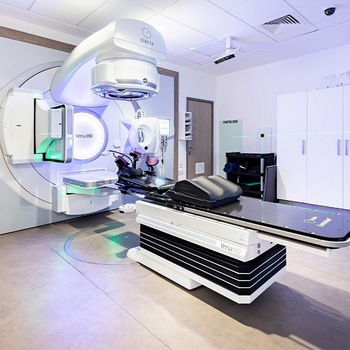
- If the complete removal of the growth is impossible, doctors recommend radiation therapy. If the tumor is inoperable or if the patient’s condition prevents surgery, radiation therapy is considered main treatment. For this purpose, the Assuta doctors use image-guided radiation therapy (IGRT). Besides, some patients may undergo radiofrequency ablation, a procedure that destroys tumor tissues with an electric current.
Stage 2
- The size of the tumor is 4-7 cm. The cancer may have spread into the nearby lymph nodes and surrounding tissues: ribs, chest muscles, the phrenic nerve, heart membranes. Cancer is also assigned Stage 2 if there are several small tumors in one lobe of the lung.
- Treatment tactics for stage 2 lung cancer largely resembles treatment for stage 1 cancer. Surgery is the main treatment method. In most cases, the tumor is completely removed. If surgery is impossible or the growth cannot be removed completely, doctors recommend radiation therapy or a combination of radiation and chemotherapy (chemoradiotherapy). Radiation therapy may also be carried out after surgery to prevent recurrence.
Stage 3
Stage 3 lung cancer is diagnosed in the following cases:
- A tumor that has spread into lymph nodes in the chest;
- Several growths in one lobe of the lung;
- Tumor over 7 cm in size that has spread into the diaphragm, mediastinum, heart, esophagus, spine or other nearby organs;
- Several tumors in different lobes of the lung;
- A tumor that has spread into lymph nodes in the neck or above the clavicle.
Stage 3 lung cancer is treated with chemoradiotherapy followed by surgery or with surgery followed by chemotherapy. Inoperable tumors are treated with chemoradiotherapy followed by immunotherapy instead of surgery.
Stage 4
This is the final stage of cancer that describes the most severe disease:
- Cancer that has spread into both lungs;
- A tumor that has formed metastases in distant organs, beyond the chest (for instance, in the liver, in bones, in the brain, etc.).
A patient with stage 4 cancer may have liquid in the pleura or in the heart membranes.
At stage 4, complete removal of the lung tumor is impossible. This is why the purpose of treatment is to reduce cancer symptoms and to slow down the progression of the disease. In Israel, doctors use:
- External beam radiation therapy;
- Internal radiation therapy (brachytherapy);
- Chemotherapy;
- Immunotherapy;
- Targeted therapy;
- Laser therapy;
- Cryotherapy (freezing of the tumor);
- Photodynamic therapy;
- Stenting (widening of the airways blocked by the tumor with a small metal tube, or a stent).
- What is the tumor type?
Non-small cell lung cancer is detected in 85% of cases. Other patients are diagnosed with small cell lung cancer. Even though these terms are similar, the prognoses and treatment methods differ significantly.
Surgery
Surgery is the main treatment for patients with stage 1 or stage 2 lung cancer. In Israel, surgery for early-stage lung cancer is usually done with minimally invasive techniques, without opening up the chest. During surgery, the doctor removes the tumor with the affected part of the lung and the affected lymph nodes. Doctors examine the patient before surgery to assess the function of the heart and the lungs. A surgical procedure is carried out only if these parameters are normal.
Radiosurgery
Sometimes, the patient’s condition does not allow surgery. In this case, radiosurgery may serve as an alternative to surgical intervention.
- First method: irradiation. The tumor will be “burnt”. Irradiation also destroys a part of healthy tissues located inside the tumor. But this part is very small, and its removal does not affect the normal function of the lungs. The source of radiation may be located either outside, or inside the body.
- Second method: brachytherapy. Radiation therapy is carried out with the help of capsules containing a radioactive substance. The capsules are implanted into the lung tissue.
Lung cancer is also often treated with a combination of radiation therapy and chemotherapy.
Chemotherapy
Chemotherapy for lung cancer is usually used if the cancer is advanced. Different types of tumors require different chemotherapy protocols (programs). This is why physicians need to know the exact type of tumor (determined by biopsy results) before starting chemotherapy.
Biological Treatment
This treatment “targets” tumor cells. Before therapy, doctors check if the tumor has receptors for hepatocyte growth factor (HGFR) and anaplastic lymphoma kinase (ALK). If they are mutated, biological treatment will be appropriate for the patient.
Immunotherapy
A relatively new treatment option is immunotherapy, which takes advantage of a person’s own immune system to help destroy cancer cells. There are several approved options that can be delivered by oral medication or intravenous infusion. Depending on the type and stage of each person’s lung cancer, treatment history, and overall health, immunotherapy may be given at Assuta alone or in combination with another type of therapy such as chemotherapy.
Targeted therapy
Another new form of treatment, targeted therapy, may help stop or slow the growth/spread of lung cancer by targeting specific aspects of tumor biology. Targeted therapy can be given in the form of tablets or by intravenous infusion at the site.
Photodynamic therapy (PDT)
The light-activated drug engulfs cancer cells. Surgeons then aim a laser at the tumor to “turn on” a drug that kills the cancer cells. Because PDT has minimal side effects, it can be used as often as needed (unlike chemotherapy and radiotherapy). We were among the first in Israel to successfully use PDT to treat early stage lung cancer.
Cryosurgery (Cryotherapy)
Liquid nitrogen freezes and kills abnormal or cancerous cells. Cryosurgery is a minimally invasive procedure and can be used to treat non-small cell lung cancer in Israel.
Ablative therapy
Radiofrequency ablation (RFA), microwave ablation, and cryoablation are minimally invasive, image-guided techniques that use extreme heat or cold to kill lung cancer cells. Ablative therapy is usually given to patients who cannot have surgery or radiation.
How to get treatment in Israel?
You can ask any questions about treatment at the Assuta Clinic by leaving an application on the website or by calling +972-33760427 (your call will be forwarded to the clinic’s international department in Israel free of charge). Our consulting physician will call you back within 1-2 hours. The consultation is absolutely free. Confidentiality is guaranteed.
A lung tumor may be removed in two ways: conventionally, with opening up the chest, and with a thoracoscope. Thoracoscopic surgery is performed with a video camera and thin endoscopic surgical tools through small incisions between the patient's ribs. Thanks to the advanced video equipment, the surgeon views the operating field with multiple magnification. We, Israeli thoracic surgeons, prefer the second option in 80% of cases since it decreases the patient's suffering and pain after surgery. Besides, studies show that this type of surgery increases the patient's chance for a cure. These procedures require complex equipment and a high level of surgical expertise. This is why they are not performed in every clinic. Assuta offers this type of surgery.
Введите номер телефона:
После беседы с врачом — Вы получите:
-
 Индивидуальную программу лечения
-
 Точную стоимость лечения
-
 Резюме врача выбранного для лечения вашего заболевания
-
 Наш врач, после изучения документов, ответит на вопрос: сможем ли мы помочь вам в Израиле
-
 Время необходимого пребывания в Израиле
-
 Решение вопросов по билетам, трансферам и отелям со скидками
FAQ
Lung cancer mostly occurs in older people. Most people diagnosed with lung cancer are 65 years of age or older; a very small number of people who are diagnosed are younger than 45 years of age. The average age of people at the time of diagnosis is about 70 years.
It usually takes 4 to 8 weeks to recover from lung surgery. Ask your surgeon when you can return to work.
Surgery offers the best chance of long-term survival for patients with primary non-small cell lung cancer (NSCLC). The chance of recurrence after surgery is 30-77%, depending on the stage and other factors.

Позвонить в Клинику Ассута

WhatsApp с врачом Ассуты 24/7
Узнайте стоимость лечения в клинике
Telegram с врачом Ассуты 24/7
Узнайте стоимость лечения в клинике

Интересует цена лечения в Ассуте?
Online